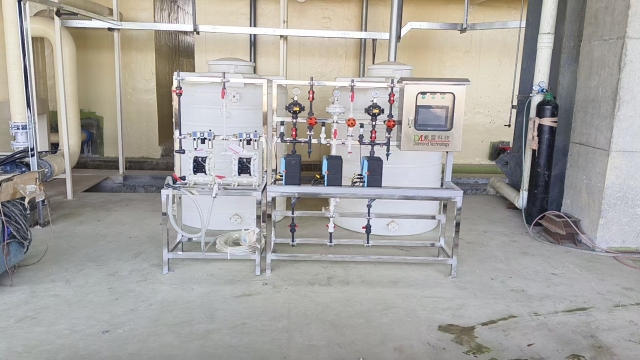
| Automatic Dosing Technical Specifications |
||
|
Introduction |
This technical specification covers core working procedures of aluminum profile anodizing production line, including degreasing, alkaline etching, neutralization, anodizing and sealing, involving five key chemicals: degreaser, neutralizer, liquid caustic soda, sulfuric acid and sealing agent. It elaborates on the composition, working principle, operation specifications and maintenance requirements of the automatic chemical dosing system. |
|
|
System composition |
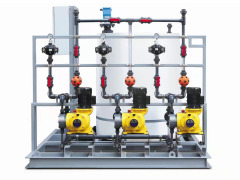
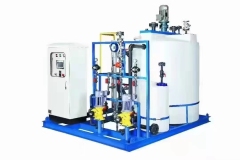
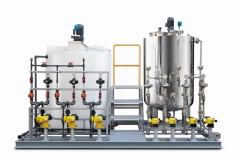
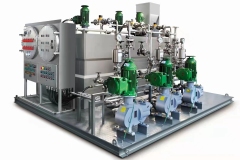
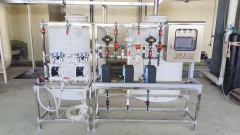
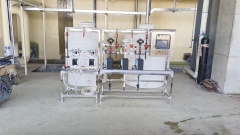
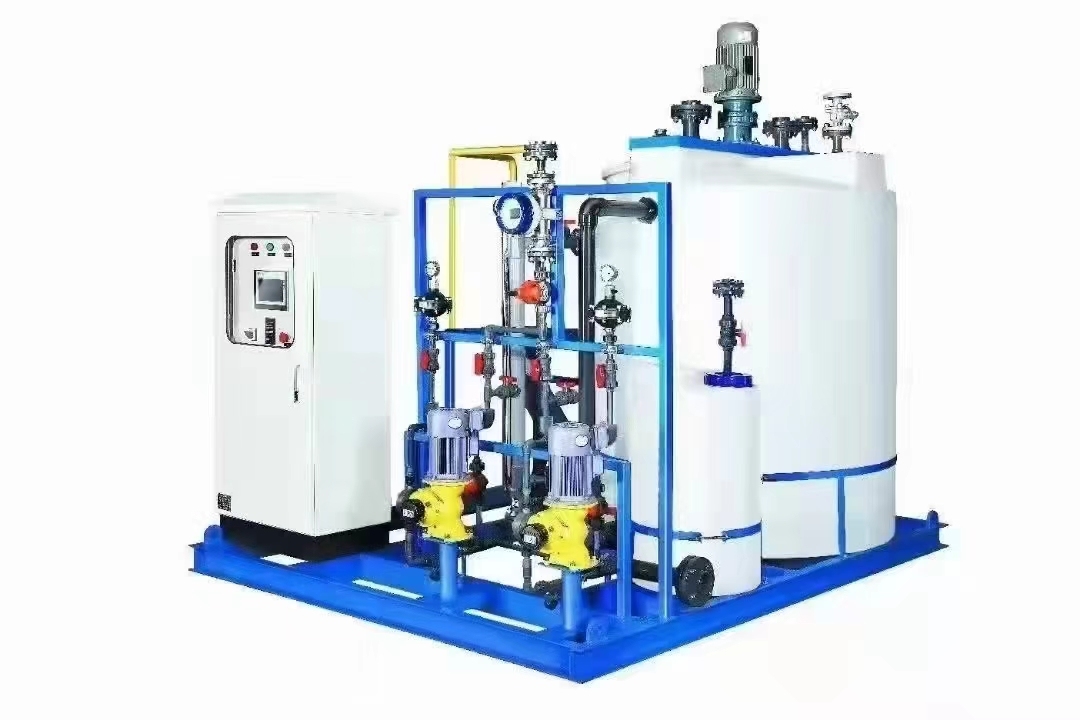
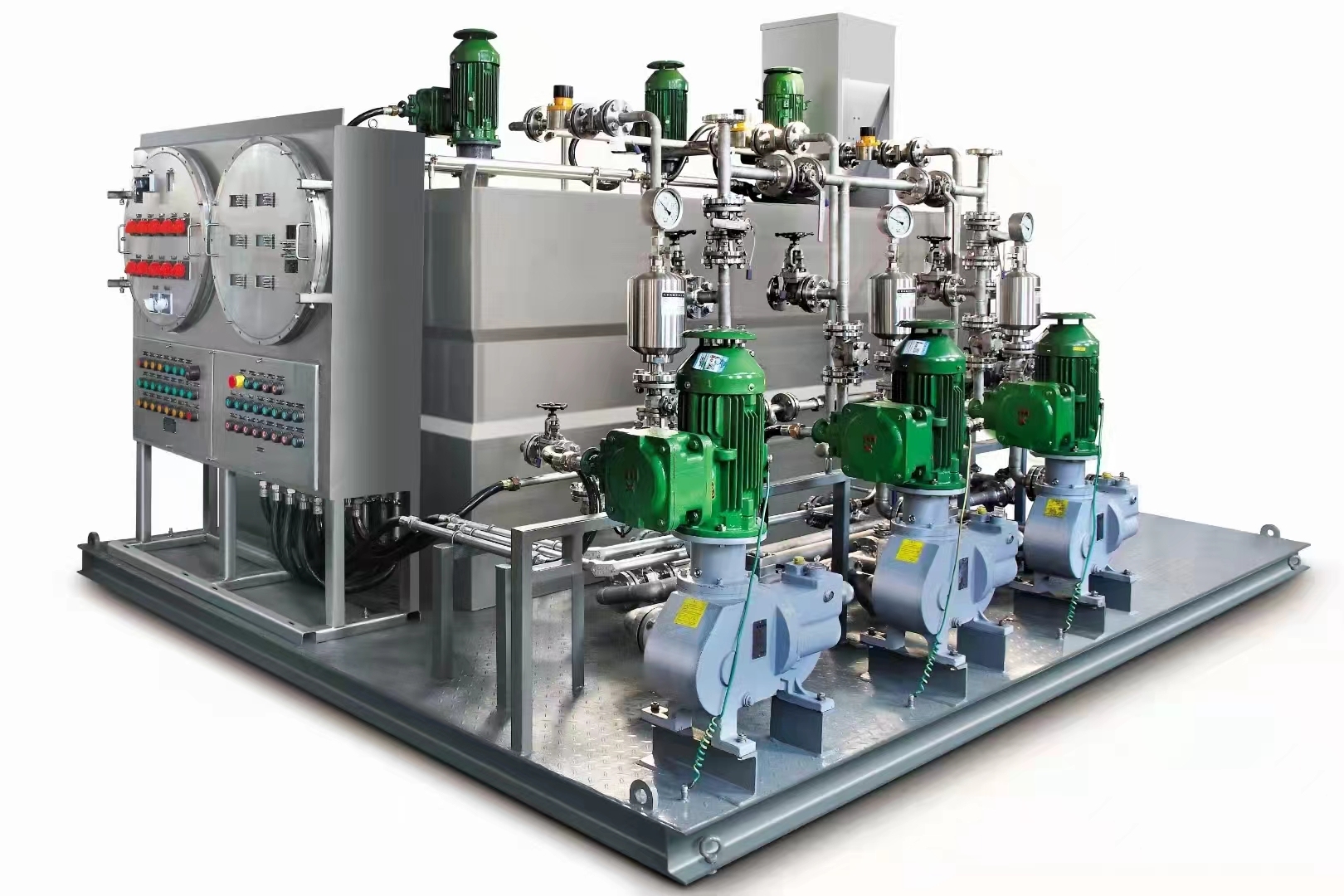
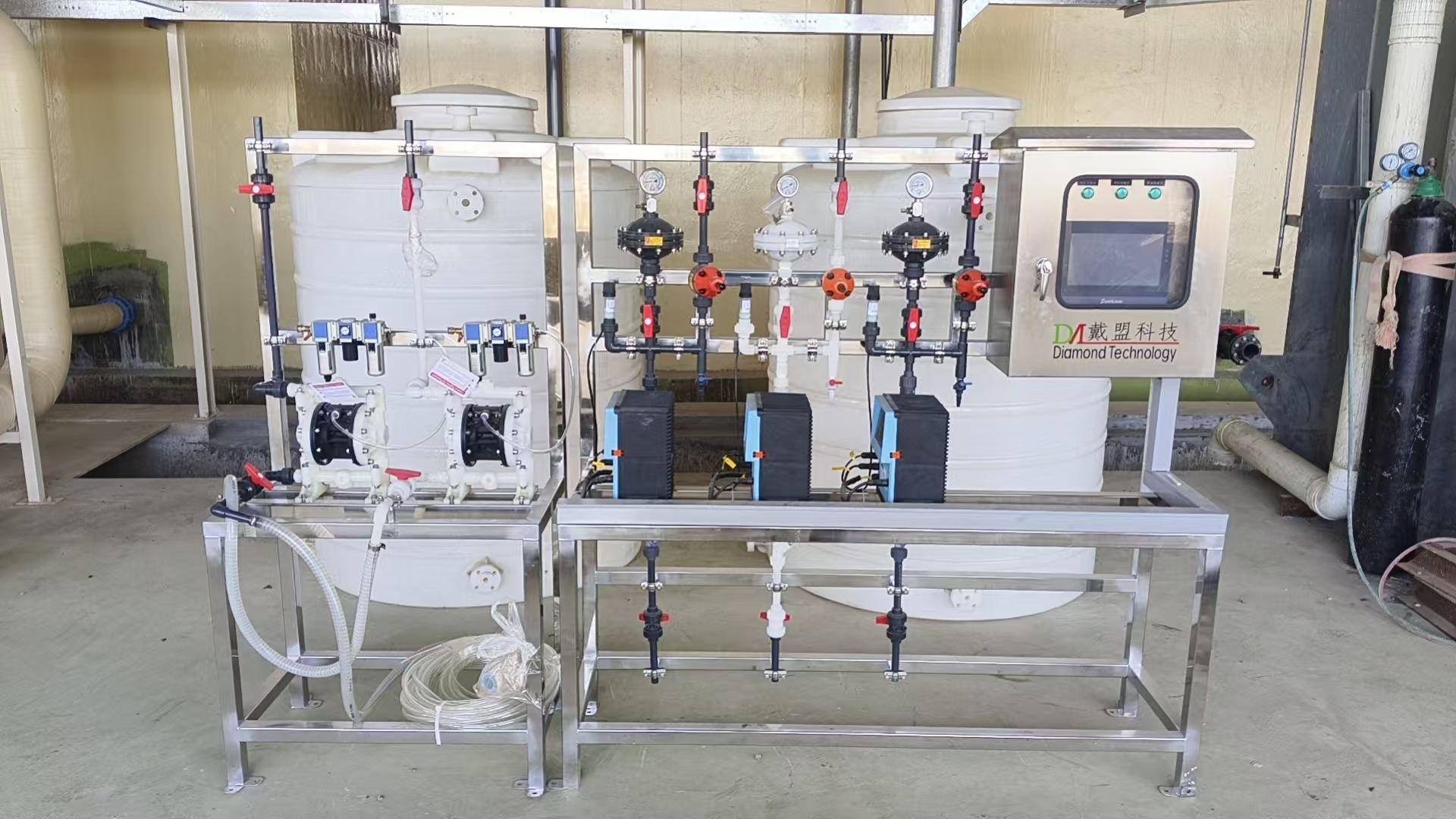
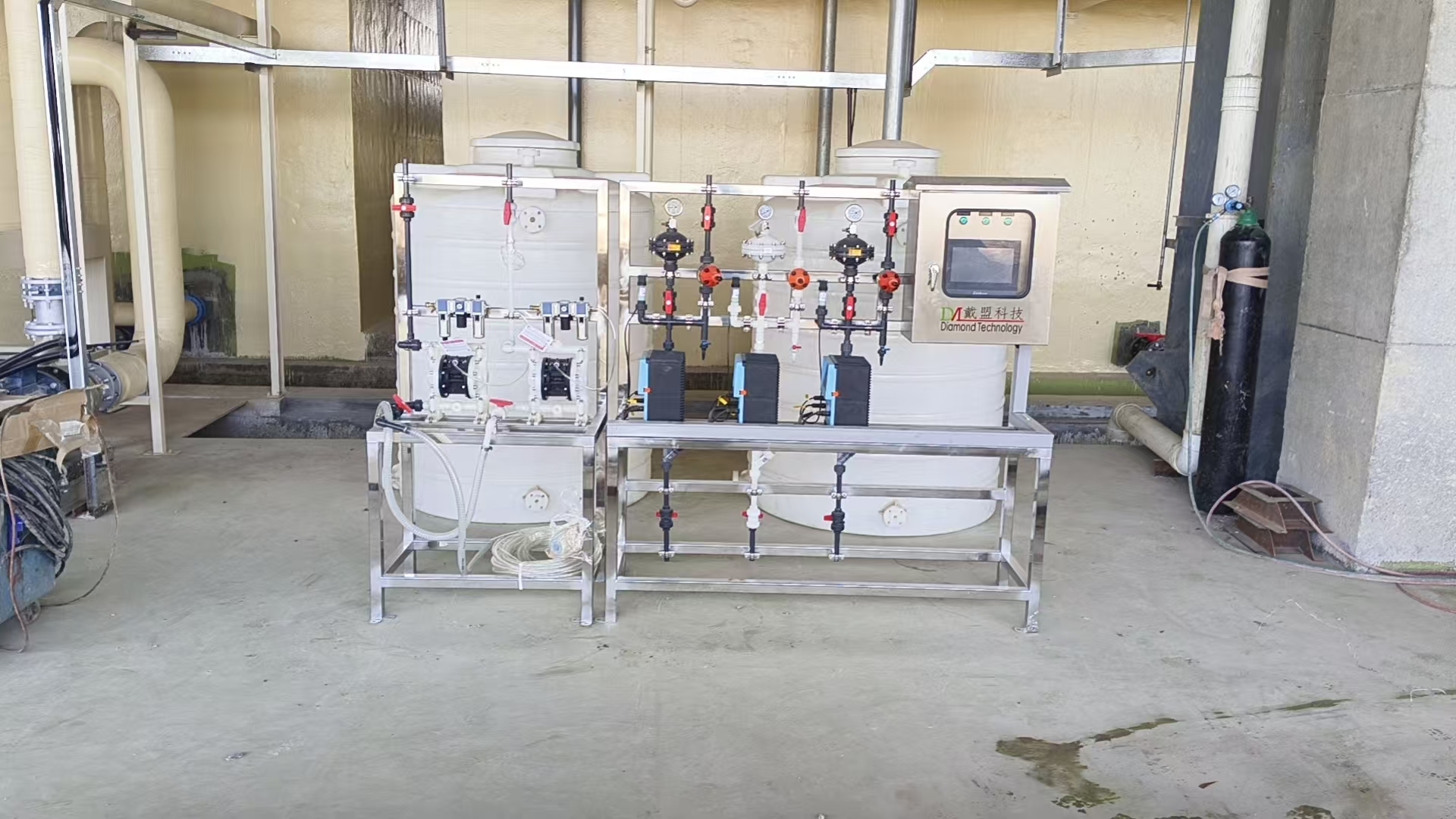
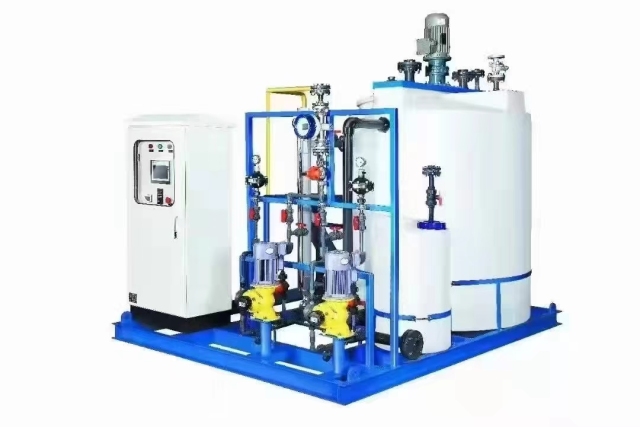
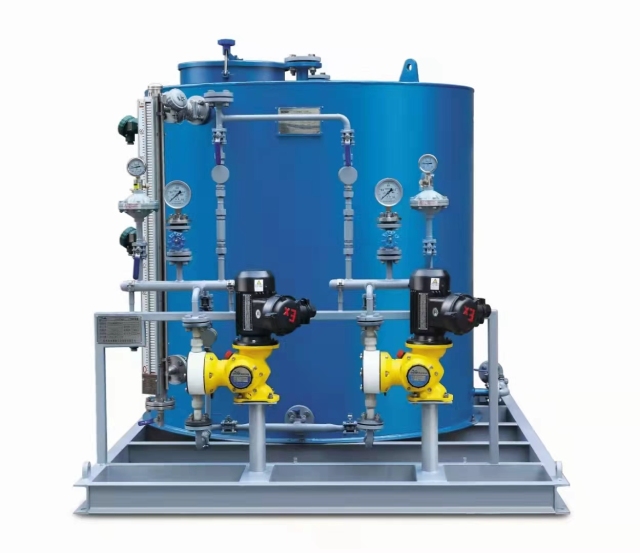
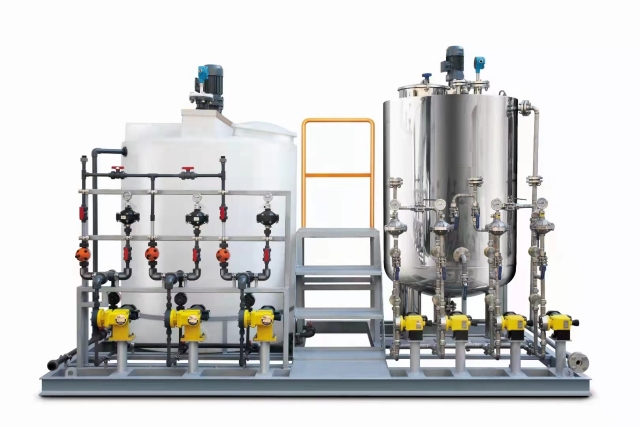
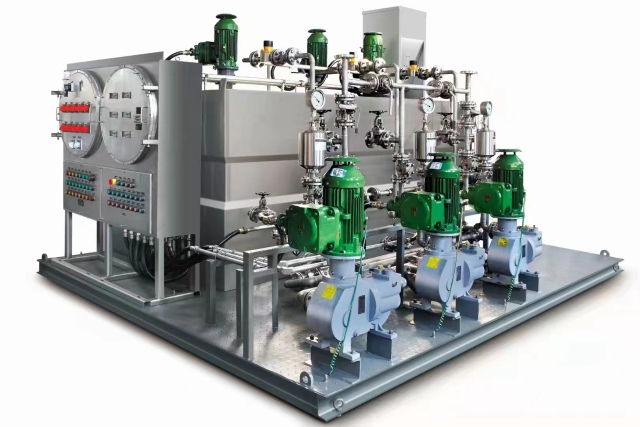
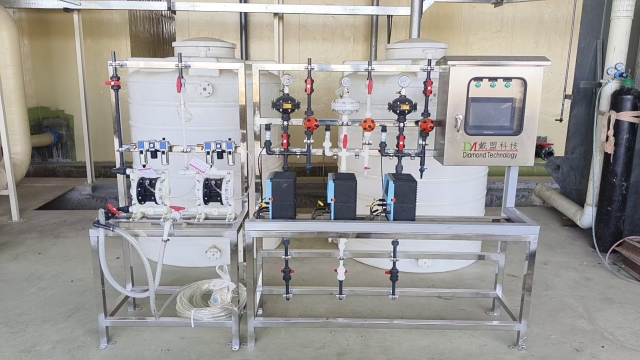
The automatic chemical dosing system mainly consists of chemical storage unit, preparation & stirring unit, metering & delivery unit, PLC control system and safety protection unit. All units work in coordination to realize full-process automation including chemical preparation, automatic calculation and precise dosing. Designed in line with industrial-grade automatic dosing standards, the system balances stable performance and easy operability. |
|
|
Chemical Storage Unit |
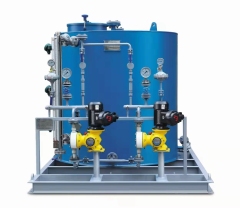
Independent sealed storage tanks are configured separately for the five types of chemicals to prevent undesired cross-reaction. Tanks are fabricated from corrosion-resistant PP or PVDF materials matching the chemical properties of respective reagents to avoid tank corrosion and leakage.
Each storage tank is equipped with a level sensor, breather valve and drain outlet. The level sensor monitors residual chemical volume in real time and triggers an automatic alarm when the liquid level drops below the preset threshold to prompt operators to replenish raw chemicals. The breather valve equalizes internal tank pressure to avoid concentration fluctuation caused by reagent volatilization or ambient air ingress. The drain outlet enables regular removal of sediment at tank bottom and guarantees chemical purity.
Tank dimensions are designed according to daily chemical consumption of the production line to secure sufficient stock for uninterrupted production. Each tank is also fitted with graduated scales and float-type level indicators for direct visual inspection of remaining liquid volume. Chemical filling and vent ports are arranged at the tank top while solution discharge ports are installed at the bottom, complying with industrial specifications for chemical storage.
|
|
|
Preparation and Agitation Unit |
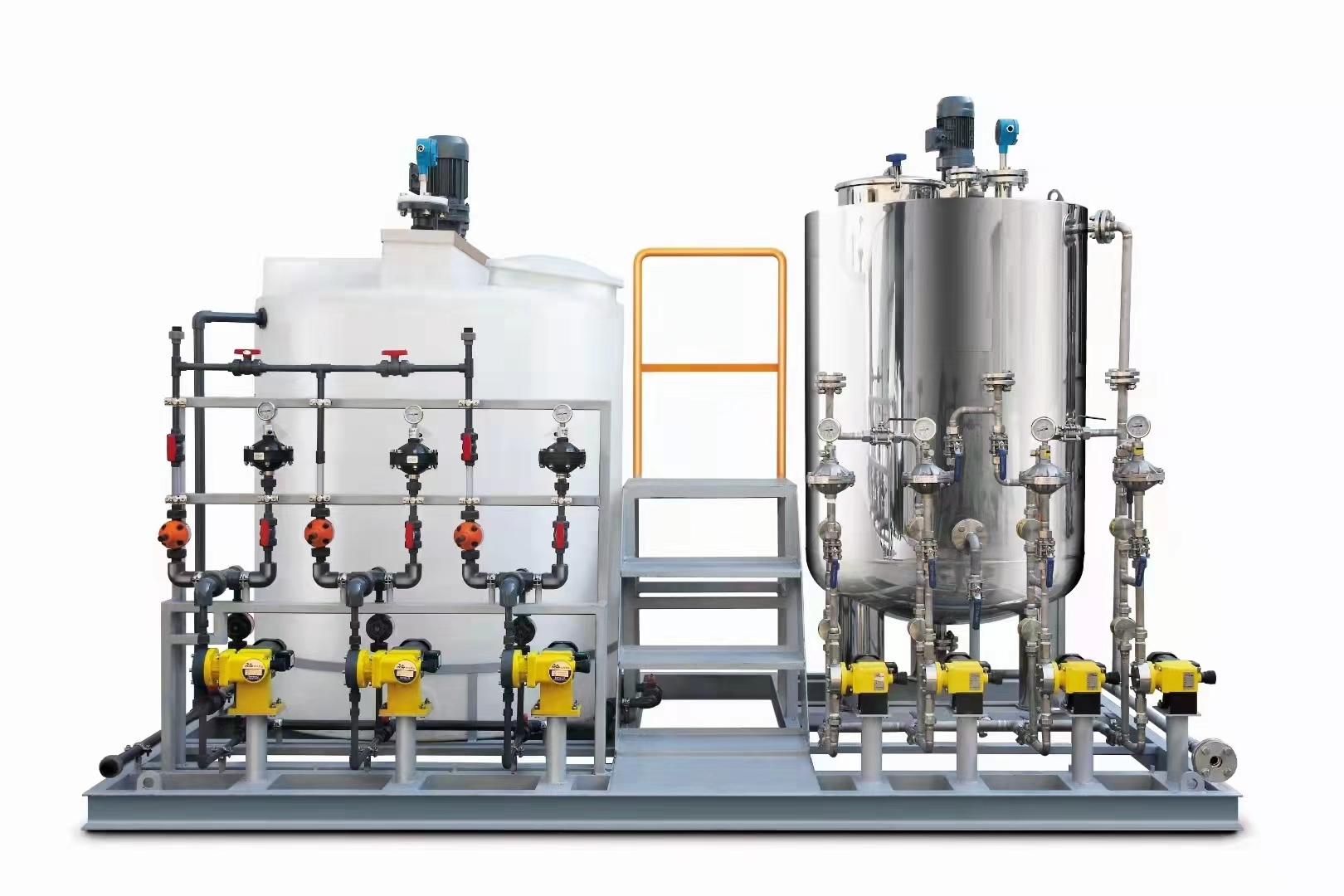
Independent chemical preparation tanks are arranged corresponding to degreasing tank, neutralization tank, anodizing tank and sealing tank respectively. Each preparation tank is equipped with a variable-frequency agitator, temperature sensor and concentration detection probe.
The agitator homogenizes chemicals during preparation with adjustable rotating speed via frequency conversion to satisfy mixing requirements of different reagents. For instance, sealing agent requires low-speed gentle stirring to prevent air bubble generation. The temperature sensor monitors in-tank temperature in real time; as certain chemicals such as degreaser need temperature control during batching, the system can interlock with heating equipment for temperature regulation to guarantee preparation quality. The concentration probe continuously collects solution concentration data and feeds signals back to the PLC system to realize closed-loop concentration control.
Dedicated pipelines connect preparation tanks and storage tanks. Check valves are mounted on pipelines to prevent backflow and raw liquid contamination, while metering valves are installed to precisely regulate chemical feeding volume and eliminate concentration deviation during preparation.
|
|
|
Metering & Conveying Unit |
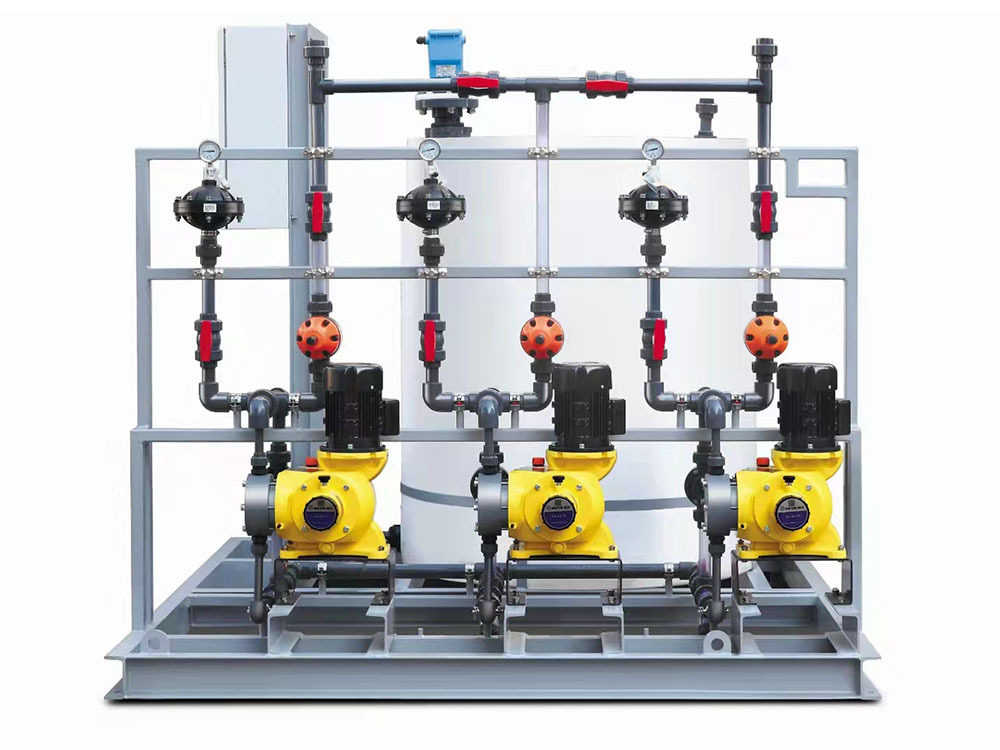
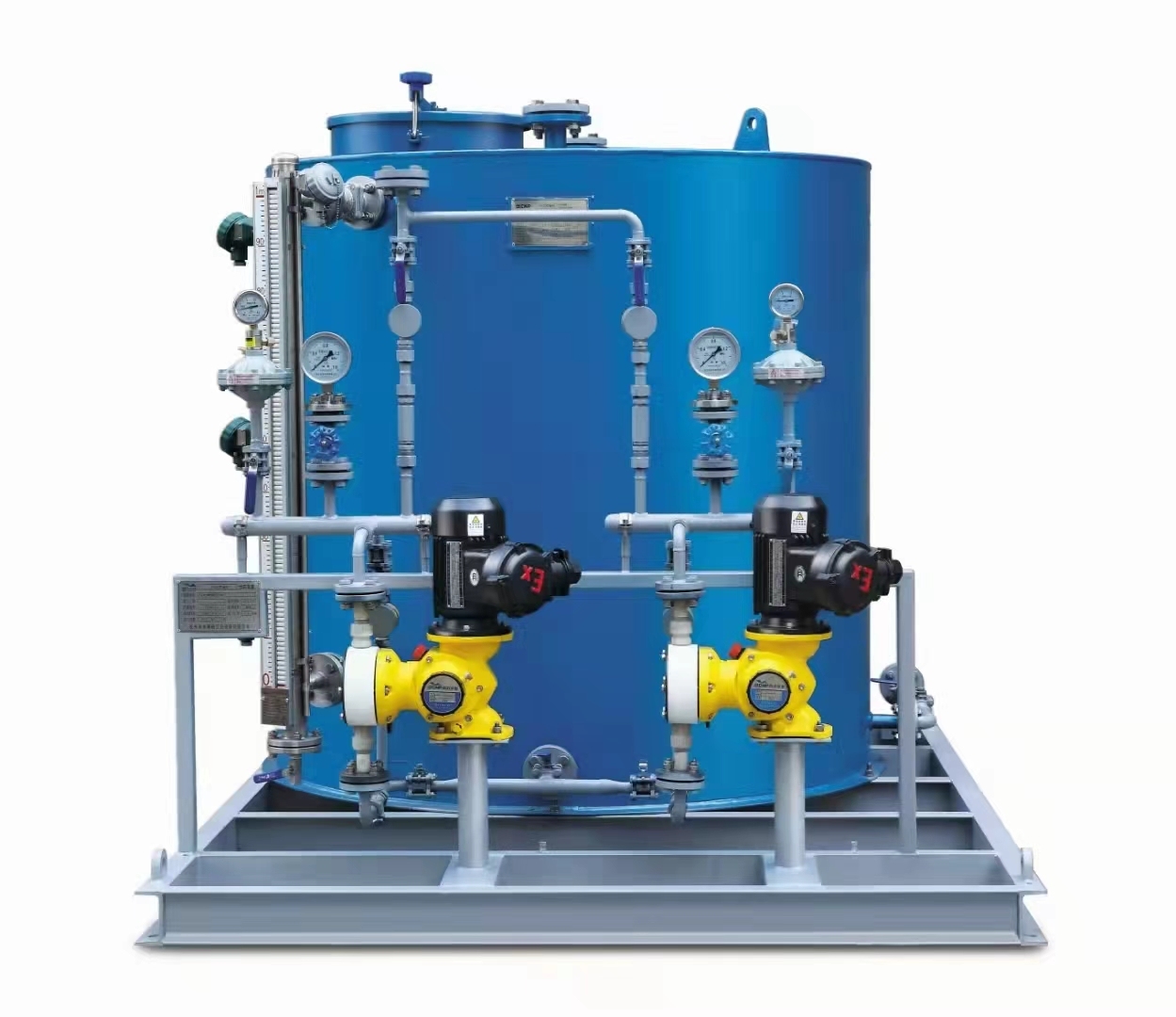
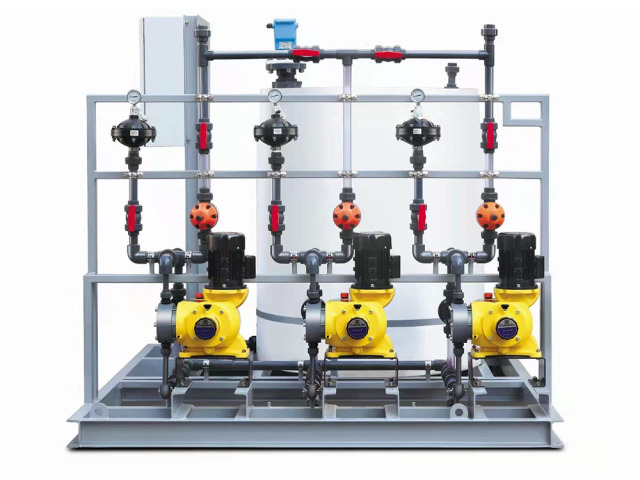
High-precision servo metering pumps are adopted as core chemical feeding components, with an independent pump configured for each chemical to avoid cross-contamination. The pump flow rate is continuously adjustable from 1 to 100 L/h, featuring stable delivery and high dosing accuracy with tolerance within ±1%, satisfying the requirement of precise chemical addition.
All transfer pipelines are made of corrosion-resistant PVC or PVDF, with shut-off valves installed at both pipe ends for convenient overhaul and maintenance. Check valves are fitted between storage tanks and metering pumps as well as between metering pumps and preparation/production tanks to prevent liquid backflow and secure safe & accurate chemical delivery. In addition, the system is equipped with circulation pumps and diagonally arranged nozzles to rapidly circulate and homogenize tank liquor after dosing, eliminating the need for extra agitators and simplifying overall equipment structure.
|
|
|
Core Principle of Automatic Dosing System
|
The core of the system adopts the automatic calculation and dosing mode during production, which stabilizes chemical concentration to meet production requirements, cuts chemical consumption waste and improves production efficiency. |
|
|
Working Principle of Automatic Calculation & Dosing During Production |
Production Area Calculation |
The total actual production area (unit:㎡) of each batch of aluminum profiles is automatically calculated by the system based on production line running speed, the number of profiles per batch, as well as the length and perimeter/width of a single profile. |
|
Chemical Consumption Calculation |
The total chemical consumption Q required for each batch is calculated against the preset unit chemical consumption per unit area, which is defined according to production process and chemical characteristics and adjustable via historical production data calibration. The calculation formula is: Q = S× chemical consumption in L/㎡ or kg/㎡. Meanwhile, the calculated consumption is revised in combination with the concentration variation \(\Delta C\) detected by in-bath concentration sensors, so as to make the computed dosage consistent with actual working conditions. |
|
|
安全注意事项safety notice |
1.Operators must receive professional training to master system operation procedures and safety properties of all chemicals. Personal protective equipment including safety goggles, acid & alkali resistant gloves and protective clothing shall be worn before any operation. | |
| 2.Five kinds of chemicals shall be strictly separated during storage and application to avoid mixed storage or mixed transportation, so as to prevent hazardous chemical reactions. | ||
| 3.When diluting corrosive chemicals such as sulfuric acid and liquid caustic soda, follow the rule of adding acid/alkali into water slowly with continuous stirring to prevent splashing and personal injury. | ||
| 4.Emergency eyewash stations and first-aid supplies shall be equipped in the operation area. In case of accidental chemical contact, flush the affected area with abundant clean water immediately and seek medical treatment for severe injuries | ||
| 5.Operators are prohibited from unauthorized equipment disassembly or parameter modification during system operation. Shut down the equipment and cut off power and air supply before maintenance or parameter adjustment. | ||
| 6.Regular inspection on all safety protection devices is required to keep them functional; system operation is forbidden when safety devices malfunction. | ||
| 7.Waste chemicals shall be disposed of in compliance with environmental regulations instead of random discharge to prevent environmental pollution. | ||